Showing posts with label History. Show all posts
Showing posts with label History. Show all posts

About Kanaka Durga temple - Vijayawada


Kanaka Durga temple placed on Indrakeeladri hill overlooking Vijayawada, constructed by the ever-great warrior in the epic Mahabharatha Arjuna as per the legends, encloses the captivating a massive 4 ft high idol of Durga in a standing position overcoming the demon Mahishasura depicting the scene of piercing him with her trident. The idol is in position of eight powerful weapons in her eight hands and is adorned with splendid ornaments and beautiful flowers.

Vasantotsava, Dussehra and Shivratri are the important festivals celebrated here. Numerous devotees from and around the city visit here during the Dussehra festival, to offer prayers and request for the blessings of Durga.
About Simhachalam


 Simhachalam, near Visakhapatnam is one of the most important Vaishnaviteshrines of South India. It has Sri Varahalakshmi Narasimha Swamy as the presiding deity. Simhachalam temple is known as the second richest temple (after Tirupati) earning a revenue of Rs. 520 million. He gives "nijaroopa darshan" (holy appearance in true form) for only 12 hours in a year and on all the remaining 364 days and 12 hours, the Lord is covered with sandalwood paste. The darshan described as chandana yatra or chandanotsavam which falls every year in Vaisakha masa commences on May 9 this year.
The deity at Simhachalam, the lion-man incarnation of Lord Mahavishnu appears like a Sivalinga when covered with sandalwood paste. The original shape of the deity in the tribhanga posture has two hands with the head of a lion on a human torso.
The Simhachalam temple faces the West unlike so many others which face the East. An east-facing entrance, according to religious belief, brings prosperity while the west - facing one brings victory.
LEGEND

The local people believe that an ancient image of Sivalinga was converted into Varahanarasimha form (the present idol of the temple) by Ramanuja, the founder of the Visistadhvaitham of Hinduism. It signifies the celebration of Kamadahana (burning of the god of Love) festival. The origins of the temple are shrouded in mystery.
An inscription dated as far back as 1908 AD of the Chola king Kuloththunga is testimony of its existence. Another inscription shows a queen of the Velavadu chief Gonga (1137-56 AD) covering the image with gold while the third inscription says the eastern Ganga King Narasimha built the central shrine in 1267 A.D.With more than 252 inscriptions describring the antecedents of the temple, it is historically important.
Sri Krishna Devaraya after defeating Prataparudra Gajapathi visited the shrine twice in 1516 AD and 1519 AD and offered numerous villages for maintenance of bhogam (worship) along with valuable jewellery, of which an emerald necklace is still in the temple. For the last two centuries, the family of the Raja of Vizianagaram are the temple's trustees.
An inscription dated as far back as 1908 AD of the Chola king Kuloththunga is testimony of its existence. Another inscription shows a queen of the Velavadu chief Gonga (1137-56 AD) covering the image with gold while the third inscription says the eastern Ganga King Narasimha built the central shrine in 1267 A.D.With more than 252 inscriptions describring the antecedents of the temple, it is historically important.
Sri Krishna Devaraya after defeating Prataparudra Gajapathi visited the shrine twice in 1516 AD and 1519 AD and offered numerous villages for maintenance of bhogam (worship) along with valuable jewellery, of which an emerald necklace is still in the temple. For the last two centuries, the family of the Raja of Vizianagaram are the temple's trustees.
Tatia Tope - (1814-1857)
Tatia Tope was a hero of the Indian Mutiny which broke out in 1857 (which should more fittingly be titled as The 1st Indian War of Independence). His role in this achieved him international fame. Tatia was born in a place named Yeswale, near Nasik in Maharashtra. He was the second of eight children. His father’s name was Pandurand Pant. His own name was Raghunath. The Peshwa (Prime Minister) liked the bright boy, and on one occasion gave him a topi (hat) bright with jewels.
"Tatia" is a term of affection in Marathi. People near and dear to Raghunath used to call him Tatia, and because he always used to wear the hat, he acquired the name Tatia Tope, which was to stay with him till the end and beyond. The vast Maratha Kingdom fell in 1818. The disposed Peshwa, and some of his loyal people moved to Brahmavarta. Despite the loss of kingdom, the spirit of the young generation who lived in Brahmavarata was very much grounded in the memory of freedom and a desire to regain it. Many of Tatia’s young friends achieved fame as martyrs in 1857.
In 1851, Nana Saheb, adopted son of Baji Rao II, became Peshwa. He was a much more fiery character than his father and was happy with his family living comfortably on a British pension. Lord Dalhousie became the Governor of India, and was far more oppressive than his predecessors. He plundered India’s wealth, robbed young princes of their crowns, and brought in a large number of Christian missionaries with the express aim of eradicating the "vile culture of the land."
The flame of discontent in the minds of the people, who were born in free India, was ready for an insurrection. A careful plan was hatched to totally drive the British out of India. Tatia and others took the task of enflaming the hearts of the Indians fighting under the pay of the British (such soldiers were termed "sepoys"). It was ordained that 31 May 1857 was the date when many Indian regiments across India would simultaneously rise in revolt. But a famous unplanned incident set of the revolt 2 months before this date, in a costly but brave blunder. The Indian soldiers got the word that their new cartridges for their rifles were greased with cow fat and pig fat. This enraged Hindus and Muslims. A regiment in Barrackpore refused to load their rifles. The British were adamant and said that any soldiers who did not comply would be stripped of their arms. One Mangal Pande could not take these insults and fired at the British captain. The revolt was now on.
Other regiments joined the revolt and moved to the capital with the cry of "Chalo Delhi." They soon captured it. Nana Saheb and Tatia Tope bided their time. they were summoned to help the panicking British, in the city of Kanpur. There they called reinforcements, and at midnight on June 4th 1857 they struck, taking the city and booting out the British. For a time Kanpur was a stronghold of the revolt, but on July 16th the British called in reinforcements and retook it. The morale of the Indian soldiers began to flay. They couldn’t stand up to the superior technology and organisation of the British, and were demoralised that many of their countrymen did not join the freedom movement, particularly the Sikhs. Tatia Tope was entrusted with the momentous task of reinvigorating the Indians, which is when he really came into his own.
Tatia went to Shivarajpur and gathered what forces he could. He fell upon the forces of General Havelock, who was marching from Kanpur to Lucknow, using the infamous guerilla techniques of the Marathas to inflict heavy losses. Tatia’s eyes then fell of Kalpi, which was strategically situated between Jhansi and Latehapur. The wrath of India descended upon the fortress and captured it. It was made into a workshop to manufacture arms. A new life was breathed into the War of Independence. In a swift swoop he captured a series of forts. He secretly reached the Scindhia regiment at Morar, whom he won over to the side of revolution, further reinforcing it. Then Tatia received the encouraging news that Major Windham of Britain, who was in charge of Kanpur was short of troops and resources. Not being one to miss an opportunity, Tatia collected his men, crossed the Jamuna and confronted Kanpur. A pitched battle was fought on the banks of the Pandu, which was eventually won. Tatia’s fame by now had reached all of Europe. His name was in nearly every newspaper. He was a household name of terror in England.
The British media were trying to portray him internationally as a vile evil fiend. True, he had affected the slaughter of a large number of British, but it was little compared with what Britain inflicted upon India, and indeed the other countries it was busy trying to colonise. Tatia Tope was a symbol of the indomitable spirit of India, a symbol of the reason why the Hindus out of all ancient peoples have survived through the long ages and continue to thrive even today.
However, the tide was to soon turn against Tatia and the rest of the rebels. The British retook Kanpur, but Tatia was beyond their reach, and arrived at Kalpi. He tried to again breath new life into the revolt, by trying to win over the native rulers and Princes to the side of freedom. However, most were scared. A few agreed to help in secret. Some stayed neutral. But others were actually rude and arrogant, insulting Nana Saheb, Tatia’s leader. Tatia resolved to teach these rulers a lesson, starting with the ruler of Charkhari. The ruler appealed to the British for help but the forces from Jhansi, commanded by Rani Lakshmibai blocked them, enabling Tatia to score a crushing victory, gaining money and ammunitions. But news of a crushing blow to the rebellion soon reached Tatia’s ears. Delhi fell, and its ruler, Bahadur Shah was taken prisoner. The forces at Delhi should have followed Tatia’s policy and continually harass the British without becoming complacent. But Bahadur Shah got too encouraged with the victory at the capital. This helped the British by allowing them to regroup, and gave them a single, unmoving target to attack.
All the Indian rulers were now terrified into submission, but the British were not happy, as Tatia was still elusive. They never knew when he would incite another revolt. They launched a mammoth search for him for months. Tatia was now alone. The British offered "pardon" to Indian soldiers who gave up their arms. Many did so. At this hour of despair, Tatia remembered his old friend, Man Singh, a leader in the Gwalior army, who was now hiding with a band of men. Tatia had felt that Man SIngh was the one of the only men he could trust. Tatia was offered a place to stay and protection. The British had caught scent of Tatia’s plan. They contacted Man Singh, offering him pardon, riches and land. The temptation could not be resisted and thus Man Singh was won over.
It was midnight of April 7th 1859 when the lion was caged, in his sleep. Tatia Tope was put on trial, at the camp of General Meadle at Shivpuri. Tatia scoffed at the charges against him. "I am not your servant. I have obeyed the orders of my Peshwa, who is my master. I have shed no innocent blood. I do not ask for any mercy...blow me to pieces on the mouth of a cannon or hang me to death from the gallows."
On April 18th 1859, 2 years after the outbreak of the war, Tatia was hung. He was totally undaunted and unbroken at the time of death. He even put the rope around his own neck to show how unphased he was. He had fought more than 150 battles. Thus passed a very brave and heroic Indian, who lived and died as a lion.
Jnanadeva - ( 1275-1298)

Jnanadeva of Devagri (Maharashtra) lived late in the 13th during the rule of King Ramadevarao, immediately prior to the Islamic invasions of that part of India. He lived for an all too brief 22 years and left a rich body of spiritual writings [Amritanubhava, the Abhangas, the Jnanesvari and the Changadeva Pasashti]. Biographical details are sketchy. It seems Jnanadeva lived approximately 1275 to 1296. Some scholars allege some attributed works are written by two different persons of the same name; there are two tombs [or Samadhi] in existence for Jnanadeva, which further confuses historical data. Jnanadeva translated the Bhagavad Gita into Marathi and provided a magnificent commentary that is richly illustrated with idiom, metaphor, simile and homely example. His principal work, the Jnanesvari was named Bhavartha Deepika (Light on the Inner Meaning); however it goes by the name "the Jnanesvari" in honour of his name, Jnanadeva. His works charged the entire region of Maharashtra with devotion and wisdom.
Jnanadeva inspired other saints that followed him - Namadeva, the tailor's son, Narahari, the goldsmith, Gora the potter, Chokamela and his wife, who were from a very low caste and Janabai, the maid servant, and so on. He was the pioneer of the Abhanga tradition, and of the Varkari tradition, the annual pilgrimage to the sacred Vittal Mandir of Pandaripur. In the ceturies which proceeded his life, the seed which he created blossomed and many other great seers and upholders of Hinduism in that land came forth, such Eknath, Tukaram and Ramdas. It is not inaccurate to say that the great political renaissance of Hinduism that occurred in Maharasthra which was the first reggion to decimate the Moghuls owes much to the renewed faith in people's hearts that was imparted by Jnanadeva, some centuries earlier.
Jnanadeva voluntarily left his body for union with the Divine in Alandi, near Poona in 1296 at the age of 22 (25 by some other scholars). He had done what he had come to do in his birth. He took his last bath, and descended the steps into the Samadhi that had been prepared for him. Sitting in the padma position and facing North, he voluntarily released his mortal coil.
------------------------------------------------------------------------------------------------------------------------
For a longer biography, which includes some of his teachings, please go to the following page:
http://www.geocities.com/ganesha_gate/jnanesh.html
Jijabai, Mother of Shivaji
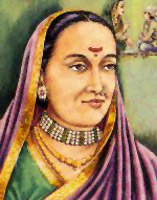
Jijabai was the mother of Shivaji perhaps the most famous and succesful Hindu warriors of the medieval age. The life of his mother, Jijabai, is no less inspiring or sacred, and takes a proud place in our history.
Her father, Lakhuji Jadhav Rao, was an important leader serving under the Muslim Nizamshahi administration. During those days, many Hindu leaders of that region were serving under the Nizam. They had small armies of their own and had obtained lands, high position and ranks under the Nizam. But they hated one another and were always trying to increase their power and prestige at the expense of one another.
It was Holi, and Jijabai's father was holding a celebration at his hall, where many were assembled. Shahji, son of Maloji (who was serving under Jadhav Rao) the future husband of Jijabai was present. Shahji and Jijabai were still small kids. Jijabai poured coloured water over Shahji and Shahji did likewise. Jadhav Rao liked the boy, and drew him and his daughter to his side, and jokingly said "don’t you think these 2 make a great couple?" Everybody agreed. Maloji, who was watching, got up and said "Noble men, did you hear what our Jadhav Rao has said? Henceforth we are related to each other as parents of the bride and bridegroom!" But this was not what Jadhav Rao had in mind. He was in too high a rank compared with Maloji. He harshly rebuked Maloji, who was gravely insulted. Maloji left the hall, feeling embarrassed at the public spectacle.
In the following months, Maloji was deeply troubled. He was unsure of what next step to take in life. For a while he went back to tilling the fields, but he was sorrowed. One night, it is said that Maloji had a strange dream. The Goddess Bhavani appeared before him in dazzling splendour and advised him not to sulk, but strive hard in life, as a hero and bringer of a new era was soon to be born in his family. The next day in the field, late at night, he once again felt the presence of Bhavani, who advised him to dig at a certain spot. He did so, and unearthed 7 pots of treasure. However he was actually led to the treasure, its acquisition was to have an important bearing on India’s future. Maloji brought a unit of 1000 cavalry, and infantry. He provided security to the people, and to traders, and in doing so grew increasingly wealthy.
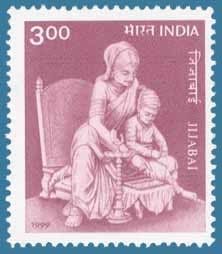 With his money, he dug wells, built lodges for travellers, fed the needy and renovated temples. His power and prestige grew, and more men began to serve under him. Maloji had not forgotten Jadhav Rao’s words. He was still insulted, and began to press him to allow Jijabai and Shahji to marry. Jadhav Rao refused, but Maloji resorted to intense pressure, and invoked the Nizam’s mediation, forcing Jadhav Rao to comply. Jijabai and Shahji were married. But Jadhav Rao developed a hatred for Maloji’s family, the Bhonsles. Shahji grew up as a renowned general and served the Nizam. Jadhav Rao joined the Moghuls (who were opposed to the Nizam) in order to harass Shahji, which he spent his life trying to do. This deeply troubled Jijabai. She was also unhappy that both her father and her husband were serving under Muslim sultans, who she saw as marauders.
 She cared not for the riches that this service could bring. It was liberty she loved.
In the meantime, the Moghuls invaded the Nizam’s dominions. Shahji was entrusted to look after the fort of Mahuli and Jadhav Rao joined in the attack. After 6 months resistance, Shahji had to evacuate the fort, with Jijabai, who was then 4 months pregnant. Jijabai got to Shivaneri, where she gave birth to Shivaji.
She used to pray, while pregnant in the temple of Jagadamba: "O Mother of the Universe, give me some of your strength. Put an end to the pride of the Marathas in the shameful service to the Muslims. Grant our lands independence. Grant that my wish be fulfilled, O Mother." She was angered at being around men whom could not protect their women, children, country and religion. She longed that her son may be part of a generation who could do this. She studied the intricate political problems of the country, in the company of experienced politicians and diplomats. She could see people falling into poverty in the once rich land and could see the culture which she loved so much being disintegrated. If only a leader could be born who could unite the scattered Hindus. It was ordered that while she was pregnant, every comfort be conferred upon her. But she wished for none of it. Rather, she wanted to climb to the tops of forts on hills, to wield swords, to discuss political questions, to put on armour and ride on horse back.
It has been said in ancient Hindu culture and is a proven fact today, that the pregnant mother, by the environment she provides, by the thoughts she thinks, and by what she wishes for her unborn child, does a tremendous amount to shape the childs life for good or bad. In Vedic traditions, there are a series of sacraments and chants to be carried out as to optimise the child’s potentials. Jijabai infused in Shivaji such a spirit, that was to emerge with great force throughout his life.
Then, the most crushing news struck Jijabai like lightening. Jadhav Rao, her father, who had recently been readmitted to the service of the Nizam, had been beheaded, together with her entire family. It is probable that the Nizam thought the Marathas were getting influential. Her husband too was in danger of meeting a similar fate, but he was shrewd and joined the Moghuls. Jijabai’s fiery spirit was set ablaze by the slaughter of her family. In the time that followed, whole villages of Marathas were wiped out. A Maratha princess was carried away while bathing. At one time Jijabai herself was kidnapped, as a bargaining chip. Such were the times in which she lived. But instead of frightening her, it just strengthened her resolve that an independent protector of the Hindus was an urgency. She brought up her son with a love of liberty infused in him. They lived at Pune, under the protection of Dadaji Kondev. Jijabai was one of the main administrators at Pune. She was educated, able and wielded great authority (not adhering to the myth of the "oppressed Hindu woman of medieval India"). When they arrived, Pune was a small village that had been consecutively ransacked by the Nizam, Adil Shah, and the Moghuls. Each and every Hindu shrine had been smashed. But soon Pune flourished, with the help of Jijabai. Jaijabai restored the shrines, and on many occasions settled disputes and metted out justice. She was responsible for most of Shivaji’s education. She had him learn in detail the lessons from the Mahabharata and the Ramayana. He learnt about the holy scriptures and arts of administration and weaponry, and the political situations in the land.
Shahji married a second wife, Tukabai, and spent most of his time with her and her son. The effect this had on Jijabai, nobody can tell. Jijabai did not lose heart, and concerned herself as before, with admistration, bringing up Shivaji and in long periods of prayer and meditation. Jijabai even set the scenes for social reforms in Hindu society. To quote an example, on her advice, the brahmins allowed a soldier named Balaji Nimbalkar to re-embrace Hinduism after converting to Islam. In those days, many people were opposed to such a move, an attitude which to some extent persists today. But Jijabai could see that because Hindus created a system whereby people could leave the Hindu fold, but not enter it (which had no basis in the scriptures), Hindu society had been weakened. Jijabai impressed upon everybody the logic of this position. Further more, showing that she was genuine in her view, she gave Shivaji’s daughter Sakhubai in marriage to Balaji’s son.
While Shahji and Dadaji were worried when Shivaji, at the age of 16 first captured a major fort, Jijabai was overjoyed. When Afzal Khan, the renowned general of Bijapur came with a large army to crush Shivaji early in his career, Shivaji turned to his mother, who unlike others told him to face the danger resolutely. Shivaji’s army was tiny by comparison, but by biding his time and using lightening guerilla techniques, he worsted Afzal Khan’s army. When at a private meeting, Afzal Khan tried to kill Shivaji, Afzal Khan ended up dead. This episode greatly increased Shivaji’s prestige.
Jijabai treated Shivaji’s companions as her own sons, and was a source of courage and inspiration to them. Tanaji Malasure is one such renowned example. He lost the fort of Simhagadh to an intense Moghul attack. She famously told him "if you free Simhagad from the enemies you will be like Shivaji’s younger brother to me." Tanaji went forth, for what others advised to be mission impossible, and succeeded, but was martyred in the process. Jijabai was watching from her fort all night. When she saw the saffron flag of the Marathas ascend on the fort, she cried with joy. But shortly after she received the news of Tanaji’s death, she began to cry with pain and could not be consoled. Another hero, Baji Prabhu, a childhood friend of Shivaji, fought with great valour to save Shivaji’s life, and in doing so died. On hearing the news, Jijabai rather than being comforted that her son was safe wept as if she had lost her own son.
In her life Jijabai had to bare sorrow after sorrow, and did it bravely for her country and religion. She reflected the glory and strength of Mother Durga. We hope her life will always be remembered with reverance. In 1674, Shivaji held a vast ceremony, declaring himself an independent ruler. Jijabai was present at the ceremony. What joy she must have felt attending the ceremony - everything she had lived for had finally bore fruit. 12 days later, Jijabai died.
Ramana Maharshi - (1879-1950)
His Significance
Ramana Maharshi is universally looked upon as one of the greatest self realised sages of modern times. He lived a quiet life with no interest in publicity, yet seekers flocked to him and today many centres bearing his name exist all over the world. He was renowned for his saintly life, for the fullness of his self-realization, and for the feelings of deep peace that visitors experienced in his presence. So many people came to see him at the holy hill of Arunchala where he spent his adult life that an ashram had to be built around him. He answered questions for hours every day, but never considered himself to be anyone's guru.
Early Life
Ramana was born on 30 December 1879 in a village called Tirucculi about 30 miles south of Madurai in Tamil Nadu, India. His middle-class parents named him Venkataraman. His father died when he was twelve, and he went to live with his uncle in Madurai, where he attended American Mission High School. At age 16, he heard somebody mention "Arunachala." Although he didn't know what the word meant (it's the name of a holy hill associated with the god Shiva) he became greatly excited. At about the same time he came across a copy of Sekkilar's Periyapuranam, a book that describes the lives of Shaivite saints, and became fascinated by it. In the middle of 1896, at age 16, he was suddenly overcome by the feeling that he was about to die. He lay down on the floor, made his body stiff, and held his breath. "My body is dead now," he said to himself, "but I am still alive." In a flood of spiritual awareness he realized he was spirit, not his body.
His Guru
Ramana Maharshi didn't have a human guru (other than himself). He often said that his guru was Arunachala, a holy mountain in South India.
His Teachings
Ramana Maharshi taught a method called self-inquiry in which the seeker focuses continuous attention on the I-thought in order to find its source. In the beginning this requires effort, but eventually something deeper than the ego takes over and the mind dissolves in the heart center. The seeker then experiences the truth off their being beyond the body, and beyond time and space. The goal of realisation of the divine within us and to merge back into the sea of consciousness where there is only pure bliss and awareness is the main ultimate goal of all paths within Hinduism. Ramana Maharshi taught one of the most structured and direct paths to it. He included the aids of worship of deities, Vedic chanting, reverence for the divinty in nature, action performed surrendered fully to God all as part of the progression to pure realisation.
A brief but extremely meaningful summary of his teachings (the Upadeshasaram composed by Ramana, consisting of 30 verses together with a short commentary) can be found at the following link:
http://www.vedanet.com/Upadesha.htm
Mira Bai (c.1498-1546)
There are few Hindus who will not have heard of Mira bai, the Rajput princess whose devotional compositions have provided a voice to the spiritual yearning of millions, and have a distinct, even a feminist, emphasis to them. Many stories exist about Mira, and it is difficult to produce a factual account of her life, although she lives perpetually through her songs, famous throughout India/ The following is a shortened account about popular folk-lore about Mirabai:
Born in Rajisthan a land of warriors and sages, sadhus and kings, but also instability and sorrow, Mirabai showed great devotion for Lord Krishna in her childhood years. One day, a holy man came to her family’s palace and was carrying a small image of Krishna. Knowing that Mirabai would appreciate it, her mother brings her the little statue of Krishna. As the wandering sage left the palace he took his image of Krishna with him. Mira bai was very upset – in fact for days she lost her appetite and was very sad. But after a few days the sadhu returned. The night before, he explained, Krishna had appeared to him in a dream, telling him to return the image to Mira!
Mira grew up to be a beautiful young lady, and was duly married to the warrior Prince Bhoj, and went to live at his palace. However, despite being a devoted and dutiful wife, devotion to Lord Krishna was always foremost on her mind, which annoyed the family of her husband. Uda, her sister in law was most annoyed at Mira’s ways. They tried to stop her from visiting the temple. Prince Bhoj came to accept his wife’s nature, and thought of her as a great devotee of the Lord. He built her a small Krishna temple within the palace. However, for company with other devotees, Mira still sought to go to the village temple. She became acquainted with the great saint Ravidas, who was a humble shoemaker by profession, and learnt much about aspects of religion that she did not know about through him. She considered Ravidas her spiritual preceptor (Guru).
Although her in-laws were becoming enraged with her behaviour, several of them could see their was something very special about her. Ravidas is turn was very impressed and moved by the intensity of her devotion to Krishna. He brought her a sitar with his own meager resources, which she used to compose and play soul stirring devotional songs to all who would listen. Through her songs Mirabai’s fame grew exceedingly, spreading far and wide throughout India. Even the Moghul Emporer Akbar came to visit her, and was so moved by her songs that he gave her a precious necklace.
Meanwhile, Prince Bhoj, Mirabai’s husband was killed in battle, against the predatory Moghuls. Bhoj’s cousin seizes the throne, who was one member of the family who had harboured dislike for Mirabai. Finding Akbar’s necklace, he accused Mirabai of being a traitor. He confined her to her room, and ordered her precious image of Krishna to be thrown into the river. She still had her devotion to Krishna, but was distraught at not being able to be amongst her fellow devotees and resented being locked in a confined space. She is believed to have write to Tulsidas, who advised her to attempt to leave, which Mira bai did so. Mira’s sister-in-law, Uda had grown fond of Mira over time and was very saddened by Mira’s departure.
Mira roamed India in devotion to her beloved Lord Krishna. She could see Krishna everywhere and in everything, and her songs describe her rapture in this vision. She grew very famous and loved. This enraged the king, the cousin of Mira’s husband Bhoj’s. He was determined now that Mira should die. Many attempts were subsequently made on Mira’s life, none of which bore fruit, due to her unfathomable love and trust in Krishna.
Ramakrishna Paramhansa - (1826-1886)

Ramakrishna Parmahamsa is perhaps the best known saint of nineteenth century India. Depite not having the least bit of interest in publicity, people flocked to him hearing that a great saint who has experienced the Divine directly resides in Dakshineshwar. His lucid direct experience of God had a universal appeal, and even the modern Hindus educated in British schools were drawn back into their culture hearing him speak. Sri AUrobindo, another great yogi of Bengal later said: "India became free on the day when arrogant youth who had been to British schools bowed down humbly before the illiterate saint, knowing that he carried within him a greater power."
He was born in a poor Brahman family in 1836, in a small town near Calcutta, West Bengal. As a young man, he was artistic and a popular storyteller and actor.
Young Ramakrishna was prone to experiences of spiritual reverie and temporary loss of consciousness. His early spiritual experiences included going into a state of rapture while watching the flight of a cranes, and loosing consciousness of the outer world while playing the role of the god Shiva in a school play.
Ramakrishna had little interest in school or practical things of the world. In 1866, he became a priest at a recently dedicated temple to the Goddess Kali located near Calcutta on the Ganges River. It was built by a pious widow, Rani Rasmani. Ramakrishna became a full-time devotee to the goddess spending increasing amounts of time giving offerings and meditating on her. He meditated in a sacred grove of five trees on the edge of the temple grounds seeking a vision of the goddess Kali.
At one point he became frustrated, feeling he could not live any longer without seeing Kali. He demanded that the goddess appear to him. He threatened to take his own life with a ritual dagger (normally held in the hand of the Kali statue). At this point, he explained how the goddess appeared to him as an ocean of light:
"When I jumped up like a madman and seized [a sword], suddenly the blessed Mother revealed herself. The buildings with their different parts, the temple, and everything vanished from my sight, leaving no trace whatsoever, and in their stead I saw a limitless, infinite, effulgent Ocean of Consciousness. As far as the eye could see, the shining billows were madly rushing at me from all sides with a terrific noise, to swallow me up. I was caught in the rush and collapsed, unconscious … within me there was a steady flow of undiluted bliss, altogether new, and I felt the presence of the Divine Mother."
About this time, an elderly holy women stayed with Ramakrishna for some time teaching him yogic and tantric meditation techniques.
A yogin named Totapuri then became Ramakrishna's mentor. Ramakrishna adopted the role of renunciant and learned a nondualist form of Vedanta philosophy from him. In this system, God is understood to be the formless unmanifest energy that supports the cosmos. Ramakrishna experienced a deep form of trance (nirvilkalpa samadhi) under the guidance of this teacher. This state can be described as complete absorption of the soul into the divine ocean of consciousness.
Ramakrishna did get married to a lady who is known as Sarada Devi, although it was a celibate marriage of a yogic couple. Disciples began to appear at this point in Ramakrishna's life. He embarked on a long period of teaching where he gathered a group of disciples around him. This period of his life is well documented by two sets of books written by his disciples. These references are listed below. Ramakrishna explained on different occasions that god is both formed and formless and can appear to the devotee either way. He often asked visitors whether they conceived of god as having qualities or as being beyond qualities. He then proceeded to teach the devotee according to the way he or she viewed the divine.
The most famous of Sri Ramakrishna’s devotees was a youth who came to him as Narendra Dutt, who is better known to us as Swami Vivekananda. Swami Vivekananda went on to create a powerful ripple in the inertia that had gripped Hindus, and significantly changed the way that Hinduism was looked at by the world. He is considered the father of the Western Yoga movement.
Ramakrishna died of cancer of the throat in 1886.
Chatrapati Shivaji - The chastiser of the Mughals

Shivaji Bhosle, also known as Chhatrapati Shivaji Raje Bhosle (Marathi: छत्रपती शिवाजीराजे भोसले) (Born:February 19, 1627, Died:March 4, 1680) was the founder of Maratha empire in western Indiain 1674.
He raised a strong army and navy, constructed and repaired forts, used guerilla warfare tactics, developed a strong intelligence network, gave equal treatment to the people from all religions and castes based on merit, and functioned like a seasoned Statesman and General. He appointed ministers with specific functions such as Internal security, Foreign affairs, Finance, Law and Justice, Religious matters, Defense etc. He introduced systems in revenue collection and warned the officials against harassment of subjects. He thought ahead of times and was a true visionary. In his private life, his moral virtues were exceptionally high. His thoughts and deeds were inspired by the teachings of his mother Jijabai, teacher Dadaji Konddev, great saints like Dnyaneshwar & Tukaram and the valiancy and ideals of the Lords Rama and Krishna
The Marathas - Samurais from Western India
The Marathas are a proud and hardy race who are a sub-set of the wider Hindu Community. They are first mentioned in Indian history as the stout fighters in the army of the Chalukya King Pulikeshin who resisted the Southward march of Emperor Harsha in the 7th century C.E
The Maratha dynasties of the ancient (pre-Muslim) period are theChalukyas (500 C.E. to 750C.E.), the Rastrakutas (750 C.E. to 978 C.E. and the Yadavas or Jadhavs (1175 C.E. to 1318 C.E.).
The Marathas were the first who crossed Malik Kafur's path, when he invaded the deccan in 1314 C.E. They were then led by the last scion of the Yadava dynasty - Ramdev Rai Yadava who ruled from Devagiri (today's Daulatabad). In their first clash with the Muslims; the Marathas lost to the invaders and accepted the status of being vassals and mercenaries of their Muslim overlords.
The Marathas before Shivaji were Mercenaries and revenue Collectors for the Muslim Rulers
In keeping with the feudal tradition, the Maratha Sardars (Generals), before Shivaji kept shifting their loyalties from one Muslim ruler to another. And there were many Muslim rulers like the Adilshahis at Bijapur, the Nizamshahis at Ahmednagar (Berar), the Qutubshahis at Golkonda (Hyderabad), etc.
Shahji Bhosale, who was Shivaji's father typified this practice of shifting loyalties from one Muslim overlord to another. He was from time-to-time in the service of the Mughals, the Adilshahis and the Nizamshahis. The thought of establishing an independent Maratha-Hindu kingdom, does seem to have crossed his mind, but he never really got about to doing it successfully. The germ of this idea however seems to have got rubbed into Shivaji - his son by Jijabai.
Shivaji Maharaj - the Visionary Saint-Soldier
Shivaji was born in the year 1627 at the Fort of Shivneri in Maharashtra in Western India. Shivaji's mother, Jijabai was a direct descendant of the erstwhile Yadav royal family of Devagiri. She seems to have nursed deep within her mind the idea of recovering independence from Muslim rule which her Yadav forebears had lost in the year 1318. Shivaji grew up with these ideas embedded into him. His childhood stories are those of playing games in which he and his friends attacked and captured forts held by the enemy.
The Oath of Independence - at Raireshwar

When Shivaji was seventeen, he decided to transform what were till then simply games to a reality. He and his friends encouraged by Jijabai and his Guru Dadoji Kondeo; decided to take a formal oath to free the country from the shackles of Muslim tyranny. This was done in the year 1645 in a dark cavern housing a small temple to the Hindu God Shiva (locally called Raireshwar).
Here Shivaji and his select band of teenaged Maratha friends slit their thumbs and poured the blood oozing from it on the Shiva-linga (Phallus representing the Lord Shiva). By this act they declared a blood-feud against Mughal tyranny. This was the beginning of a long and arduous Maratha-Mughal struggle that went on for the next century and a half to culminate in the defeat of the Mughals and their replacement by the Marathas as the dominant power in India

Shivaji's encounter with Afzal Khan
When Shivaji started his military career by capturing the fortress of Torana, it sent shockwaves in the Adilshshi court at Bijapur. Here was a local Hindu chieftain, daring to challenge the might of a Muslim ruler. The retribution was swift and Adil Shah sent in his most fearsome general named Afzal Khan to bring back Shivaji dead or alive to Bijapur. Afzal Khan who was reputed to be more than six feet tall and of a real massive built, set on his mission and in order to lure Shivaji down into the plains, he destroyed the Hindu temples at Tuljapur, Pandharpur and Shikhar Shenganapur.
Afzal Goes Up to Pratapgad
This ploy failed to work and Shivaji stuck to his Hill fastness in the Sahyadris. Shivaji even sent a letter to Afzal Khan praising the legendary strength of Afzal Khan's powerful arms and his reputed fearlessness. Shivaji addressed him as his uncle and said that he was afraid to come down to meet Afzal Khan. Shivaji asked him to come up into the hills to meet him and on condition that Afzal Khan came with not more than few select soldiers. The proud Khan felt that the Dekkhan-Ka-Chuha (Rat of the Deccan as the Muslims scornfully addressed Shivaji) had really chickened out.
When Shivaji started his military career by capturing the fortress of Torana, it sent shockwaves in the Adilshshi court at Bijapur. Here was a local Hindu chieftain, daring to challenge the might of a Muslim ruler. The retribution was swift and Adil Shah sent in his most fearsome general named Afzal Khan to bring back Shivaji dead or alive to Bijapur. Afzal Khan who was reputed to be more than six feet tall and of a real massive built, set on his mission and in order to lure Shivaji down into the plains, he destroyed the Hindu temples at Tuljapur, Pandharpur and Shikhar Shenganapur.
Afzal Goes Up to Pratapgad
This ploy failed to work and Shivaji stuck to his Hill fastness in the Sahyadris. Shivaji even sent a letter to Afzal Khan praising the legendary strength of Afzal Khan's powerful arms and his reputed fearlessness. Shivaji addressed him as his uncle and said that he was afraid to come down to meet Afzal Khan. Shivaji asked him to come up into the hills to meet him and on condition that Afzal Khan came with not more than few select soldiers. The proud Khan felt that the Dekkhan-Ka-Chuha (Rat of the Deccan as the Muslims scornfully addressed Shivaji) had really chickened out.
Afzal Meets his Nemesis in Shivaji
Khan-Saheb agreed to go up the hills at Pratapgad to meet his nemesis. When the meeting took place, Afzal Khan embraced Shivaji and with his diminutive enemy (Shivaji was less than five feet in height) in his grip, Afzal suddenly pulled out his dagger and tried to stab Shivaji. When Afzal's dagger could not plunge into Shivaji Maharaj due to the protective armour which Shivaji was wearing, Afzal tried to throttle him. But the wily Maratha was more than prepared for this as he had come down not only with full armour that was hidden by his thick satin robes, but he also had with him the 'Wagh Nakh' - a sharp weapon resembling tiger claws that could be hidden in the grip of one's fist. In addition, he had the Bichhwa - curved dagger hidden in the pocket of his waistcoat.
Jiwa Mahalaya
On sensing that the Khan meant to throttle him, Shivaji pierced the tiger claws deep into Khan's belly and pulled out his intestines. After which Shivaji repeatedly stabbed him with the bichhwa. The Khan bellowed "Daga" "Daga" and yelled for Syed Banda, his bodyguard to come to his rescue. When Syed Banda, also a burly Muslim was about to strike Shivaji with his sword, Shivaji's bodyguard Jiva Mahalya struck off Banda's upraised arm in the air itself.
Santaji Kawji
After this commotion, the bleeding Khan tried to make good his escape and rushed into his palanquin. As the palanquin bearers set off with the fleeing Khan, Santaji Kawji, another of Shivaji's select warriors cut-off the feet of the bearers and Khans' palanquin, with its load of Khansaab fell to the ground. Santaji Kawji, then finished off the task of sending Khan to his final resting place. Khan's army which was waiting in the valley was ruthlessly massacred by the Marathas who were hiding behind every crevice and bush in the densely wooded jungles around the Pratapgad fort. At the place where this encounter took place on 10th November 1659 between Shivaji Maharaj and the Khan, there stands today a Kabar (grave) erected by Shivaji for the departed Khan's soul to rest in peace.
Bijapur Stymied
The result of this dramatic encounter was that the Bijapur ruler panicked and after that never posed a serious threat to the growing Maratha power. The next Muslim power which Shivaji turned to was that of the Mughals. Here was the real challenge for Shivaji. The Bijapur rulers were a provincial power, while the Mughals were an power of imperial dimensions whose writ ran almost all over Northern India.
The Siege of Panhalgad
Despite this defeat, Bijapur's Adil Shah made one last attempt to check Shivaji by sending another general named Siddhi Jouhar against him. Siddhi besiged Panhalgad where Shivaji was camping. The seige went on for some months, from summer till the monsoons. But Shivaji Maharaj slipped out of Panhalgad and reached safely at Vishalgad.
The Brave Deed of Baji Prabhu Deshpande
It is during this escape that Baji Prabhu Deshpande held the pursuing enemy troops at a narrow pass called Ghod Khind. Baji Prabhu immortalized himself by laying down his life but ensured that his Master reached safely at Vishalgad. This narrow pass is today known as Pawan Khind i.e. a Holy Pass. Made holy by Baji Prabhu's memorably brave deed.
Encounter with Shaista Khan - Aurangzeb's Uncle
The next Khan to come down 'literally' before Shivaji was Shaista Khan. On hearing Shivaji's depredations, Aurangzeb was furious and wanted to desperately crush this infidel upstart. He sent his uncle maternal Shaista Khan with a large and powerful army to checkmate Shivaji.
But even this time the wily Maratha proved that brain was stronger than the brawn.
Shaista Khan came into Maharashtra and started devstating towns, villages fields, temples, forts and everything that came in his path.
Shaista Establishes his Harem in Shivaji's Devghar (Prayer Room)
To provoke Shivaji, Shaista Khan established his camp in Shivaji's home in Pune called Lal-Mahal. And to top it up, he put up his Harem in Shivaji's Devghar (prayer room).
Khan-Saheb agreed to go up the hills at Pratapgad to meet his nemesis. When the meeting took place, Afzal Khan embraced Shivaji and with his diminutive enemy (Shivaji was less than five feet in height) in his grip, Afzal suddenly pulled out his dagger and tried to stab Shivaji. When Afzal's dagger could not plunge into Shivaji Maharaj due to the protective armour which Shivaji was wearing, Afzal tried to throttle him. But the wily Maratha was more than prepared for this as he had come down not only with full armour that was hidden by his thick satin robes, but he also had with him the 'Wagh Nakh' - a sharp weapon resembling tiger claws that could be hidden in the grip of one's fist. In addition, he had the Bichhwa - curved dagger hidden in the pocket of his waistcoat.
Jiwa Mahalaya
On sensing that the Khan meant to throttle him, Shivaji pierced the tiger claws deep into Khan's belly and pulled out his intestines. After which Shivaji repeatedly stabbed him with the bichhwa. The Khan bellowed "Daga" "Daga" and yelled for Syed Banda, his bodyguard to come to his rescue. When Syed Banda, also a burly Muslim was about to strike Shivaji with his sword, Shivaji's bodyguard Jiva Mahalya struck off Banda's upraised arm in the air itself.
Santaji Kawji
After this commotion, the bleeding Khan tried to make good his escape and rushed into his palanquin. As the palanquin bearers set off with the fleeing Khan, Santaji Kawji, another of Shivaji's select warriors cut-off the feet of the bearers and Khans' palanquin, with its load of Khansaab fell to the ground. Santaji Kawji, then finished off the task of sending Khan to his final resting place. Khan's army which was waiting in the valley was ruthlessly massacred by the Marathas who were hiding behind every crevice and bush in the densely wooded jungles around the Pratapgad fort. At the place where this encounter took place on 10th November 1659 between Shivaji Maharaj and the Khan, there stands today a Kabar (grave) erected by Shivaji for the departed Khan's soul to rest in peace.
Bijapur Stymied
The result of this dramatic encounter was that the Bijapur ruler panicked and after that never posed a serious threat to the growing Maratha power. The next Muslim power which Shivaji turned to was that of the Mughals. Here was the real challenge for Shivaji. The Bijapur rulers were a provincial power, while the Mughals were an power of imperial dimensions whose writ ran almost all over Northern India.
The Siege of Panhalgad
Despite this defeat, Bijapur's Adil Shah made one last attempt to check Shivaji by sending another general named Siddhi Jouhar against him. Siddhi besiged Panhalgad where Shivaji was camping. The seige went on for some months, from summer till the monsoons. But Shivaji Maharaj slipped out of Panhalgad and reached safely at Vishalgad.
The Brave Deed of Baji Prabhu Deshpande
It is during this escape that Baji Prabhu Deshpande held the pursuing enemy troops at a narrow pass called Ghod Khind. Baji Prabhu immortalized himself by laying down his life but ensured that his Master reached safely at Vishalgad. This narrow pass is today known as Pawan Khind i.e. a Holy Pass. Made holy by Baji Prabhu's memorably brave deed.
Encounter with Shaista Khan - Aurangzeb's Uncle
The next Khan to come down 'literally' before Shivaji was Shaista Khan. On hearing Shivaji's depredations, Aurangzeb was furious and wanted to desperately crush this infidel upstart. He sent his uncle maternal Shaista Khan with a large and powerful army to checkmate Shivaji.
But even this time the wily Maratha proved that brain was stronger than the brawn.
Shaista Khan came into Maharashtra and started devstating towns, villages fields, temples, forts and everything that came in his path.
Shaista Establishes his Harem in Shivaji's Devghar (Prayer Room)
To provoke Shivaji, Shaista Khan established his camp in Shivaji's home in Pune called Lal-Mahal. And to top it up, he put up his Harem in Shivaji's Devghar (prayer room).
Shaista is Lucky - He Only Loses His Fingers
Shivaji bided his time for many months and one on fine day (night), he with a select band of Maratha Samurais, sneaked into Pune and into the Lal-Mahal. He tracked down the sleeping Khan to his bed. The Khan sensing that his time was up tried jumping out of the window. At that point Shivaji cut off the Khan's fingers with which he was holding on to the window sill.
On the Khan's wife's pleading before Shivaji to spare her husband's life as she considered Shivaji to be her brother. And so killing her husband would mean making her a widow, Shivaji spared the Khan's life. This was a mistake for which Shivaji was to pay dearly later. Shivaji made good his escape from the Khan's lair, but not before the treacherous Khan ordered his troops to give chase and try to capture the fleeing Shivaji.
Shaista's Retreat from Maharashtra
The Khan however, decided that enough was enough and returned to Delhi - without his fingers. This happened in April 1663
The failure of his uncle peeved Aurang to no end and he now sent another general to subjugate Shivaji. This was Mirza Raja Jai Singh, Aurangzeb's Hindu general who was also the scion of the house of the Suryavanshi Kachhawaha's who we saw earlier had ingratiated themselves to the Mughal rulers by giving away their daughters in marriage to the Mughal Padishah. (The Moghuls incidentally never returned the favour by giving, or even offerring, their daughters to the Rajputs!). This Mirza Raja Jaisingh who came with a powerful force was smarter than Shaista Khan sent earlier by Aurangzeb. Mirzaji laid siege to Purandar alongwith a systematic loot and destruction of rural Maharashtra.
The Brave Deed of Murar Baji
When Raja Jai Singh and his general Diler Khan laid siege to the Fort of Purandar. Murar Baji was the Maratha Fort Commandant at Purandar. To break the morale of the Maratha troops, Diler Khan launched a viscious attack on the fort and laid waste the surrounding countryside. The Mughals succeeded in forcing their way into the outer defenses of Purandar.
But the Marathas were not easily intimidated, they withdrew to the inner fort (bali-killa) and kept on their attack on the besieging Mughals. One day, Murar Baji decided to rain hell on the enemy and the Marathas stormed out of the fort and fell upon the Mughals who were occupying the outer fort. In face of the Maratha attack, the Mughals broke ranks and fled to their main camp in the plains below, where Diler Khan was camping.
Seeing the ferocity of the Maratha attack, Diler Khan, decided to tempt Murar Baji with an offer of making him a general in the Mughal army if he betrayed Shivaji. When news of this offer reached Murar Baji, in the midst of the battle, his rage knew no bounds, and in a rash act he pushed into the ranks of the Mughal troops, hacking right, left and center towards Diler Khan and shouted at him that he would reply Diler's offer by cutting off his head and taking it to Shivaji Maharaj.
Murar Baji had left his own troops behind and was now surrounded by Mughal troops on all sides, but he could only see Diler, whose head he wanted. This act was brave but rash and cost Murar Baji his life. Their leader dead, the Marathas withdrew into the fort. The news of this battle and the passing away of Murar Baji and the long drawn siege along with the destruction of the countryside forced Shivaji to reach out for a compromise with Jai Singh in the interests of the sufferring population of Maharashtra.
The Treaty of Purandar
The treaty of Purandar signed between Mirza Raja Jai Singh and Shivaji Maharaj had among many conditions, one condition that Shivaji accompany Mirzaji to Agra. Shivaji decided to go to Agra in 1666.
Shivaji's Visit to Aurangzeb at Agra
At Agra, when Shivaji presented himself at the Moghul court, Aurangzeb deliberately insulted him by making him stand behind a lesser noble whom Shivaji has once defeated in battle. This was a calculated humiliation that Aurang had arranged for Shivaji. As a result Shivaji left the court in a huff. This gave Aurangzeb an excuse to declare Shivaji of having committed the offence of insulting the Mughal court.
Imprisonment of Shivaji
Aurangzeb detained Shivaji in Mirza Raja Jai Singh's house where Shivaji had put up. Shivaji seems to have read Aurangzeb's mind of having him put to death. Aurag had made plans to shift Shivaji into the proper Mughal dungeons.
Shivaji's Escape from Aurang's Clutches
Shivaji struck upon an idea and said that he wanted to make peace with God by sending fruit and sweetmeats to Brahmins and holy men. To this Aurangzeb consented. One fine day Shivaji and his son Sambhaji hid himself in two of the sizable baskets in which fruits and sweetmeats had been packed everyday and made good their escape from Aurnag's custody. In doing this Shivaji must have had in mind what had happened to his general Netaji Palkar who after being captured by the Mughals had been forced to embrace Islam and change his name to Quli Mohammed Khan. Netaji was forced to serve as a Mughal soldier in Afghanistan, till he too made good his escape and returned to Shivaji to reconvert to Hinduism and join the forces of Swaraja once again. Others were not so lucky, they were made to convert to Islam and some others were simly tortured to death - as was to happen later with Shivaji's son Shambhu Raje or Sambhaji, ater Shivaji's death.
Coronation of Shivaji as Chattrapati
After returning to the deccan, Shivaji again raised an army and recaptured all the forts that he had been made to surrender to the Mughals as per the treaty of Purandar. In this phase we see the exploits of his brave general Tanaji Malusare who perished while recapturing the invincible fort of Kondana from Uday Bhan - the renegade Rajput who was the Mughal commandant of the fort. After all the forts had been recaptured, Shivaji was pursuaded by Gaga Bhatt (a brahmin from Benaras) and his mother the ageing Jijabai to formally crown himself as the king of the Marathas. The coronation took place at Raigad on the 6th of June 1674.
Shivaji bided his time for many months and one on fine day (night), he with a select band of Maratha Samurais, sneaked into Pune and into the Lal-Mahal. He tracked down the sleeping Khan to his bed. The Khan sensing that his time was up tried jumping out of the window. At that point Shivaji cut off the Khan's fingers with which he was holding on to the window sill.
On the Khan's wife's pleading before Shivaji to spare her husband's life as she considered Shivaji to be her brother. And so killing her husband would mean making her a widow, Shivaji spared the Khan's life. This was a mistake for which Shivaji was to pay dearly later. Shivaji made good his escape from the Khan's lair, but not before the treacherous Khan ordered his troops to give chase and try to capture the fleeing Shivaji.
Shaista's Retreat from Maharashtra
The Khan however, decided that enough was enough and returned to Delhi - without his fingers. This happened in April 1663
The failure of his uncle peeved Aurang to no end and he now sent another general to subjugate Shivaji. This was Mirza Raja Jai Singh, Aurangzeb's Hindu general who was also the scion of the house of the Suryavanshi Kachhawaha's who we saw earlier had ingratiated themselves to the Mughal rulers by giving away their daughters in marriage to the Mughal Padishah. (The Moghuls incidentally never returned the favour by giving, or even offerring, their daughters to the Rajputs!). This Mirza Raja Jaisingh who came with a powerful force was smarter than Shaista Khan sent earlier by Aurangzeb. Mirzaji laid siege to Purandar alongwith a systematic loot and destruction of rural Maharashtra.
The Brave Deed of Murar Baji
When Raja Jai Singh and his general Diler Khan laid siege to the Fort of Purandar. Murar Baji was the Maratha Fort Commandant at Purandar. To break the morale of the Maratha troops, Diler Khan launched a viscious attack on the fort and laid waste the surrounding countryside. The Mughals succeeded in forcing their way into the outer defenses of Purandar.
But the Marathas were not easily intimidated, they withdrew to the inner fort (bali-killa) and kept on their attack on the besieging Mughals. One day, Murar Baji decided to rain hell on the enemy and the Marathas stormed out of the fort and fell upon the Mughals who were occupying the outer fort. In face of the Maratha attack, the Mughals broke ranks and fled to their main camp in the plains below, where Diler Khan was camping.
Seeing the ferocity of the Maratha attack, Diler Khan, decided to tempt Murar Baji with an offer of making him a general in the Mughal army if he betrayed Shivaji. When news of this offer reached Murar Baji, in the midst of the battle, his rage knew no bounds, and in a rash act he pushed into the ranks of the Mughal troops, hacking right, left and center towards Diler Khan and shouted at him that he would reply Diler's offer by cutting off his head and taking it to Shivaji Maharaj.
Murar Baji had left his own troops behind and was now surrounded by Mughal troops on all sides, but he could only see Diler, whose head he wanted. This act was brave but rash and cost Murar Baji his life. Their leader dead, the Marathas withdrew into the fort. The news of this battle and the passing away of Murar Baji and the long drawn siege along with the destruction of the countryside forced Shivaji to reach out for a compromise with Jai Singh in the interests of the sufferring population of Maharashtra.
The Treaty of Purandar
The treaty of Purandar signed between Mirza Raja Jai Singh and Shivaji Maharaj had among many conditions, one condition that Shivaji accompany Mirzaji to Agra. Shivaji decided to go to Agra in 1666.
Shivaji's Visit to Aurangzeb at Agra
At Agra, when Shivaji presented himself at the Moghul court, Aurangzeb deliberately insulted him by making him stand behind a lesser noble whom Shivaji has once defeated in battle. This was a calculated humiliation that Aurang had arranged for Shivaji. As a result Shivaji left the court in a huff. This gave Aurangzeb an excuse to declare Shivaji of having committed the offence of insulting the Mughal court.
Imprisonment of Shivaji
Aurangzeb detained Shivaji in Mirza Raja Jai Singh's house where Shivaji had put up. Shivaji seems to have read Aurangzeb's mind of having him put to death. Aurag had made plans to shift Shivaji into the proper Mughal dungeons.
Shivaji's Escape from Aurang's Clutches
Shivaji struck upon an idea and said that he wanted to make peace with God by sending fruit and sweetmeats to Brahmins and holy men. To this Aurangzeb consented. One fine day Shivaji and his son Sambhaji hid himself in two of the sizable baskets in which fruits and sweetmeats had been packed everyday and made good their escape from Aurnag's custody. In doing this Shivaji must have had in mind what had happened to his general Netaji Palkar who after being captured by the Mughals had been forced to embrace Islam and change his name to Quli Mohammed Khan. Netaji was forced to serve as a Mughal soldier in Afghanistan, till he too made good his escape and returned to Shivaji to reconvert to Hinduism and join the forces of Swaraja once again. Others were not so lucky, they were made to convert to Islam and some others were simly tortured to death - as was to happen later with Shivaji's son Shambhu Raje or Sambhaji, ater Shivaji's death.
Coronation of Shivaji as Chattrapati
After returning to the deccan, Shivaji again raised an army and recaptured all the forts that he had been made to surrender to the Mughals as per the treaty of Purandar. In this phase we see the exploits of his brave general Tanaji Malusare who perished while recapturing the invincible fort of Kondana from Uday Bhan - the renegade Rajput who was the Mughal commandant of the fort. After all the forts had been recaptured, Shivaji was pursuaded by Gaga Bhatt (a brahmin from Benaras) and his mother the ageing Jijabai to formally crown himself as the king of the Marathas. The coronation took place at Raigad on the 6th of June 1674.

Shivaji Maharaj's Seal. Shivaji Maharaj was the first Hindu King to ascend a throne after a long time. During the Dark Days of Muslim Tyranny, Shivaji Maharaj was one of the very few (along with the Ranas of Mewad), to issue his own coinage. Shivaji's coinage was in Sanskrit. The coins were in two main denominations, the Shivrai made of copper was a lower denomination coin and the Hon was a gold coin of a higher denomination. To erase the memory of Shivaji Maharaj, Aurangzeb issued an order after the passing away of Shivaji Maharaj that all Hons were to be imponded and melted. That Aurang did not succeed in erazing Shivaji Maharaj's illustruous personality from our memory is another matter
A "Nazarana" - The Daughter-in-law of the Muslim Subahdar of Kalyan
During the days after the coronation, many Maratha generals presented Nazaranas (tribute in kind) to the newly anointed King of Maharashtra. It was then a practice of the Muslims to abduct any fair maiden and to force her into the harem as a concubine. (A harem is a term for the living quarters of abducted women, nominally treated as wives.) On one such occasion, following the "illustrious" example set by the Muslim aggressors, a Maratha Sardar also (general) abducted a daughter-in-law of the Muslim Subahadar of Kalyan, near Mumbai (Kalyan was then under Mughal occupation).
This Sardar presented this "Nazarana" to Shivaji Maharaj, expecting to be patted on the back for such a "fair" tribute. Shivaji Maharaj's reaction at this occasion, gives us an insight into the mind of the person who lived 300 years before us. Shivaji not only chided the general, but warned him and all the other Maratha generals that such a heinous offence would henceforth attract a penalty of the offender's hands being chopped off. The dazed general was asked by Shivaji to return with full honours, the daughter-in-law of the Muslim Subahadar of Kalyan.
The Maratha ballads (Povadas) that describe this event say that on hearing Shivaji's dialogue in Marathi the teenaged girl is said to have exclaimed "Ya Allah, yeh aadmi nahin farishta hai. Ees farishtey pe kamyaabi bahal karna." ("O Lord, this is not an ordinary man but an angel. Bestow success on this angel.") The Maratha balladeers, while narrating this event say that "Asseech amuchi aai asatee,sundar roopavati; amhi hee sundar zhalo asato - vadaley Chattrapati" ("If my mother had been as beautiful, I too would have been as beautiful - exclaimed Chattrapati"). These dialogues might as well be a later romanticization of what actually happened. But it proves a point - Shivaji Maharaj had risen above the attitudes of religious bigotry, and beastly behaviour that had come to typify the Indian ruling class under Muslim rule.
Karnataka and Tamil Nadu Campaigns of Shivaji
After this Shivaji launched his campaign in Karnatak, which took him up to Thanjavur in Tamil Nadu. The period from 1674 up his passing away in 1680 was a relatively peaceful period, as the Mughal made no more attempts to molest the Marathas. Only after the passing away of Shivaji Maharaj did Aurang again dared to venture into Maharashtra, and then too he did not entrust the task to any general. He came himself in 1682 and stayed on in the deccan till his death in 1707.
The Marathas After Shivaji Maharaj - Sambhaji
After the passing away of their illustrious leader, the marathas fell into relative disarray. Shivaji's eldest son Sambhaji did not prove adequate to the responsibility of preserving the flame of independence to which his father had given the initial spark. Sambhaji was extremely fearless and brave. Maratha chronicles (Bakhars) refer to him as in fact more assertive and independent than his father. But in addition to all this Sambhaji also had vices like wine and women. In his eventful life, Shivaji Maharaj did not seem to have had enough time to groom his successor. Sambhaji's temper had a short fuse. During Shivaji's life-time itself, he had once quarreled with his father and had gone over to join the Mughals as one of their Mansabdars. Subsequently, he realized his folly and came back to his father and repented. But this act of his deeply hurt his father nad also displayed his chimerical nature for which he was to pay later with a painful death.
Sambhaji's Assassination
Sambhaji did not falter in battling the Mughals, as well as the Portuguese. In those days Aurnagzeb had come over to the Deccan. After subjugating the Bijapur and Golkonda kingdoms, he turned his attention on the Marathas. He carried on a ceaseless campaign against the Marathas. Sambhaji performed many daring acts in this guerrilla campaign especially in the Konkan region. But in spite of his bravery, his short temper and his vices went against him. One night, when he was passing thru Sangmeshwar with a small band of bodygaurds, he was waylaid by the Mughals and was brought in chains before Aurangzeb.
On being presented to Aurabgzeb, Sambhaji was asked to surrender all his forts, accept Islam and enter the service of the Mughal Emperor. To this affront, Sambhaji scronfully replied that he could consider this if Aurangzeb gave him his daughter in marriage and proclaimed him as the successor to the Mughal throne! On hearing this Aurang flew into a rage and decided to torture Sambhaji to death. Sambhaji's eyes were gouged, his tongue was cut off, followed by his arms and legs. Sambhaji died an inhuman death, but till the agonizing end he never recanted his faith.
Rajaram, Tarabai and Shahu
After Sambhaji's assassination, his step-brother Rajaram became the king. He was not especially brave and is said to have been physically weak. During his time Aurangzeb besieged and captured Raigad. Instead of fighting the enemy, Rajaram fled from Raigad when the fort was about to be besieged. Raigad fell into the hands of the Mughals in 1689 when a renegade Maratha called Suryaji Pisal betrayed the defences of the fort to the besieging Mughals. During the capture of Raigad, Sambhaji' wife Yesubai and his son Shahu were taken captive by the Mughals. Rajaram's life as Chattrapati was spent mostly in fleeing from the Mughal armies. Nevertheless during his times, the generals like Santaji Ghorpade and Dhanaji Jadhav carried out a whirlwind guerrilla campaign to harras the Mughal army and never let Aurangzeb rest in one place. Thus in spite of his presence in the Deccan for more than 25 years from 1680 to 1707, Aurang could not subsume the flame of independence lit by Shivaji Maharaj
Aurang's Death in 1707
When Aurang died in 1707, his son Azamshah who was with him at his deathbed, proclaimed himself the Mughal Emperor and prepared to battle his elder brother Muaazam, who was then in Kabul. To ensure that the Marathas came over to his side, Azamshah released Shahu who was till then held as a prisoner by the Mughals. Shahu had been a prisoner for 18 years from 1689 up to 1707. When Shahu staked his claim to the throne, Tarabi was ruling. A battle between the two was inevitable. This battle fought at Khed went in favour of Shahu and he became the Chattrapati. He was incidentally the last de facto Chattrapati of the Marathas.
A "Nazarana" - The Daughter-in-law of the Muslim Subahdar of Kalyan
During the days after the coronation, many Maratha generals presented Nazaranas (tribute in kind) to the newly anointed King of Maharashtra. It was then a practice of the Muslims to abduct any fair maiden and to force her into the harem as a concubine. (A harem is a term for the living quarters of abducted women, nominally treated as wives.) On one such occasion, following the "illustrious" example set by the Muslim aggressors, a Maratha Sardar also (general) abducted a daughter-in-law of the Muslim Subahadar of Kalyan, near Mumbai (Kalyan was then under Mughal occupation).
This Sardar presented this "Nazarana" to Shivaji Maharaj, expecting to be patted on the back for such a "fair" tribute. Shivaji Maharaj's reaction at this occasion, gives us an insight into the mind of the person who lived 300 years before us. Shivaji not only chided the general, but warned him and all the other Maratha generals that such a heinous offence would henceforth attract a penalty of the offender's hands being chopped off. The dazed general was asked by Shivaji to return with full honours, the daughter-in-law of the Muslim Subahadar of Kalyan.
The Maratha ballads (Povadas) that describe this event say that on hearing Shivaji's dialogue in Marathi the teenaged girl is said to have exclaimed "Ya Allah, yeh aadmi nahin farishta hai. Ees farishtey pe kamyaabi bahal karna." ("O Lord, this is not an ordinary man but an angel. Bestow success on this angel.") The Maratha balladeers, while narrating this event say that "Asseech amuchi aai asatee,sundar roopavati; amhi hee sundar zhalo asato - vadaley Chattrapati" ("If my mother had been as beautiful, I too would have been as beautiful - exclaimed Chattrapati"). These dialogues might as well be a later romanticization of what actually happened. But it proves a point - Shivaji Maharaj had risen above the attitudes of religious bigotry, and beastly behaviour that had come to typify the Indian ruling class under Muslim rule.
Karnataka and Tamil Nadu Campaigns of Shivaji
After this Shivaji launched his campaign in Karnatak, which took him up to Thanjavur in Tamil Nadu. The period from 1674 up his passing away in 1680 was a relatively peaceful period, as the Mughal made no more attempts to molest the Marathas. Only after the passing away of Shivaji Maharaj did Aurang again dared to venture into Maharashtra, and then too he did not entrust the task to any general. He came himself in 1682 and stayed on in the deccan till his death in 1707.
The Marathas After Shivaji Maharaj - Sambhaji
After the passing away of their illustrious leader, the marathas fell into relative disarray. Shivaji's eldest son Sambhaji did not prove adequate to the responsibility of preserving the flame of independence to which his father had given the initial spark. Sambhaji was extremely fearless and brave. Maratha chronicles (Bakhars) refer to him as in fact more assertive and independent than his father. But in addition to all this Sambhaji also had vices like wine and women. In his eventful life, Shivaji Maharaj did not seem to have had enough time to groom his successor. Sambhaji's temper had a short fuse. During Shivaji's life-time itself, he had once quarreled with his father and had gone over to join the Mughals as one of their Mansabdars. Subsequently, he realized his folly and came back to his father and repented. But this act of his deeply hurt his father nad also displayed his chimerical nature for which he was to pay later with a painful death.
Sambhaji's Assassination
Sambhaji did not falter in battling the Mughals, as well as the Portuguese. In those days Aurnagzeb had come over to the Deccan. After subjugating the Bijapur and Golkonda kingdoms, he turned his attention on the Marathas. He carried on a ceaseless campaign against the Marathas. Sambhaji performed many daring acts in this guerrilla campaign especially in the Konkan region. But in spite of his bravery, his short temper and his vices went against him. One night, when he was passing thru Sangmeshwar with a small band of bodygaurds, he was waylaid by the Mughals and was brought in chains before Aurangzeb.
On being presented to Aurabgzeb, Sambhaji was asked to surrender all his forts, accept Islam and enter the service of the Mughal Emperor. To this affront, Sambhaji scronfully replied that he could consider this if Aurangzeb gave him his daughter in marriage and proclaimed him as the successor to the Mughal throne! On hearing this Aurang flew into a rage and decided to torture Sambhaji to death. Sambhaji's eyes were gouged, his tongue was cut off, followed by his arms and legs. Sambhaji died an inhuman death, but till the agonizing end he never recanted his faith.
Rajaram, Tarabai and Shahu
After Sambhaji's assassination, his step-brother Rajaram became the king. He was not especially brave and is said to have been physically weak. During his time Aurangzeb besieged and captured Raigad. Instead of fighting the enemy, Rajaram fled from Raigad when the fort was about to be besieged. Raigad fell into the hands of the Mughals in 1689 when a renegade Maratha called Suryaji Pisal betrayed the defences of the fort to the besieging Mughals. During the capture of Raigad, Sambhaji' wife Yesubai and his son Shahu were taken captive by the Mughals. Rajaram's life as Chattrapati was spent mostly in fleeing from the Mughal armies. Nevertheless during his times, the generals like Santaji Ghorpade and Dhanaji Jadhav carried out a whirlwind guerrilla campaign to harras the Mughal army and never let Aurangzeb rest in one place. Thus in spite of his presence in the Deccan for more than 25 years from 1680 to 1707, Aurang could not subsume the flame of independence lit by Shivaji Maharaj
Aurang's Death in 1707
When Aurang died in 1707, his son Azamshah who was with him at his deathbed, proclaimed himself the Mughal Emperor and prepared to battle his elder brother Muaazam, who was then in Kabul. To ensure that the Marathas came over to his side, Azamshah released Shahu who was till then held as a prisoner by the Mughals. Shahu had been a prisoner for 18 years from 1689 up to 1707. When Shahu staked his claim to the throne, Tarabi was ruling. A battle between the two was inevitable. This battle fought at Khed went in favour of Shahu and he became the Chattrapati. He was incidentally the last de facto Chattrapati of the Marathas.

The Spread of the Maratha Empire.
The Marathas rose to the status of Imperial Rulers of India. Their rise from freedom fighters for swarajya to the rulers of Marathi Daulat (Empire) took place from 1720 to 1761 and lasted till 1803 when they were supplanted by the British.
The Peshwas - Baji Rao, Balaji Baji Rao, Madhav Rao
As we saw above, after Shahu, the de facto executive power passed into the hands of the hereditary Prime Ministers the Peshwas. Balaji Viawanath Bhatt was succeeded by his son Baji Rao the first. Baji Rao was a very able and ambitious soldier and he was the one who consolidated Maratha power in North India.
history and the fissiparous tendencies he let loose ultimately let to the downfall of the Maratha empire.
His first mistake was to go back on the agreement between his grandfather Balaji Viswanath Bhatt and Kanhoji Angre according to which the Peshwa was to have no direct control over the Maratha Navy. He attacked the his own navy and weakened one arm of the Maratha might.
During his rule, North India was invaded by Ahmed Shah Abdali first in 1756. Balaji Baji Rao then sent his brother Raghunath Rao along with Malharrao Holkar to defeat Abdali. Raghunath rao not only defeated Abdali but chased him up to the Khyber pass till Attock in Paktoonistan. .
This success of Raghunath Rao aroused the jealousy of Balaji Baji Rao's wife Gopikabai, who started conspiring against Raghunath Rao to undermine his influence. This led to corresponding jealousy from Anandibai who was Ragunath Rao's wife. The unfortunate fallout of this court intrigue ws to end in the disastrous 3rd battle of Panipat in 1761.Let us see the event that led to this catastrophe at Panipat.
The Persian Invasion of 1740 by Nadir Shah
Some 80 years after Shivaji when the Mughal Empire had been weakened by repeated Maratha attacks, the Afghan raider Ahmed Shah Durrani (Abdali) invaded North India. As the Mughals were past their prime and were now living at the mercy of the Marathas, they did not dare oppose Ahmed Shah. The task of challenging him was left to the Marathas. The Marathas who then were on their ascendancy in North India had since the first Persian-Afghan invasion by Nadir Shah, the king of Persia in 1740, established themselves as a dominant power in Northern India. The 20 years from 1740 to 1760 saw a see-saw battle between the Afghans and the Marathas for the domination of North India.
With the defeat of Mohammed Shah, the Moghul Emperor in 1740 by Nadir Shah (in whose army Ahmed Shah Abdali was a general), the Mughal power steadily declined and its place was usurped by the Rohillas who were led by an ambitious and ruthless chieftain named Najib Khan. Najib's ambition was to supplant the Moghal Emperor and crown himself as the ruler of India by capturing Delhi.
The Marathas Liberate Punjab
But the growing power of the Marathas in their northward expansion, stood between Najib and his ambition. To overcome the Marathas, in 1755, Najib invited Ahmed Shah Abdali from Afghanistan to help him in defeating the Marathas and crown himself the ruler of India. In this, he was thwarted by the Marathas who decisively defeated the Rohillas and Afghans near Delhi in 1756. The defeat was so decisive that Najib Khan surrendered to the Marathas and became their prisoner. The Maratha forces were led by Shrimant Raghunath Rao and Malhar Rao Holkar.
After defeating the Afghan-Rohilla forces, the Marathas pursued the Afghans into the Punjab and beyond up to the Khyber pass. The last frontier of the Marathas was at Attock in today's NWFP (or Paktoonistan) on the Afghan border. (This campaign of the Marathas led by Shrimant Raghunath Rao is called as Raghu's Bharari - i.e. whirlwind campaign.
Thus after nearly 800 after the last Punjabi King Tirlochan Pal Shahi had been defeated by Mahmud of Ghazni in 1020 C.E. did that part of India come under Indian rule in 1756 due to the liberation of Punjab by the Marathas.
Meanwhile with machinations and trickery, Najib Khan won over Malhar Rao Holkar and secured his release. On his release Najib started to undermine the Marathas once again and treacherously killed Dattaji Shinde (eldest brother of Mahadji Shinde). Najib continued to battle the Shindes in 1757-58 and with his newly found confidence again invited Ahmed Shah Abdali to invade India.
PANIPAT - A Result of Court Intrigues at Pune
The court intrigues at Shaniwarwada in Pune between Gopikabai (Peshwa Balaji Baji Rao's wife) and Anandibai (Raghunath Rao's wife) led to the sidetracking of Raghunath Rao in favour of the Peshwas cousin, Sadashiv Rao Bhau (along with Viswas Rao the Peshwa's son and successor) as the Supreme commander of the Maratha forces that were to give battle to Abdali a second time. It was unfortunate for the Marathas, that due to rivalries, a successful commander like Raghunath Rao was bypassed in favour of another general.
The 3rd Battle of Panipat
When Abdali launched his second invasion in 1759 the Marathas who after their successes in 1756 had been hibernating in Maharashtra and Central India again woke up and in alliance with the Jat King Suraj Mal of Bharatpur formed an alliance. This alliance led by Shrimant Sadshiv Rao Bhau and Shrimant Vishwas Rao (the Peshwa Shrimant Balaji Baji Rao's son) won spectacular victories and captured Delhi and Kunjapura (where the Afghan treasury and armoury was located). Here the alliance developed cracks due to the Maratha insistence on not allowing the Jats to loot Delhi. This ultimately split the alliance and Suraj Mal withdrew from the alliance. The Marathas consequently marched upto Panipat, but instead of continuing their attacks to completely defeat the partly defeated Abdali and Najib Khan, they stayed put at Panipat, blocking the way of the Afghans back to Afghanistan. Seeing their way back to their homeland blocked, the Afghans now became restless. They in turn, decided to block the way of the Marathas back into the Deccan.
Stand-off for one year
This stand-off continued for one whole year from the 14th of January 1760 up to the 14th of January 1761. This led to the fall in the morale of the stranded Marathas and ultimatley led to their defeat at Panipat. The Marathi term "Sankrant Kosalali" meaing "Sankranth has befallen us" comes from this event. During this stand-off the Afghans cut-off all supplies to the huge Maratha army. The Afghans with Najib Khan meanwhile also recaptured Delhi and Kunjpura. On the decisive day of 14th January 1761 (Makar Sankranti), the Marathas decided to break-through the Afghan blockade and re-enter Deccan. The disastrous battle saw about one hundred thousand Maratha troops being slaughtered in a matter of eight hours. But the Afghans too suffered heavy losses and decided enough was enough and went back to Afghanistan never to return to India.
The defeat of the Marathas and the withdrawal of the Afghans created a power vacuum in North India in the period 1761-1790. It was this vacuum that was filled up by the rising British power. But more of this later.
The Marathas rose to the status of Imperial Rulers of India. Their rise from freedom fighters for swarajya to the rulers of Marathi Daulat (Empire) took place from 1720 to 1761 and lasted till 1803 when they were supplanted by the British.
The Peshwas - Baji Rao, Balaji Baji Rao, Madhav Rao
As we saw above, after Shahu, the de facto executive power passed into the hands of the hereditary Prime Ministers the Peshwas. Balaji Viawanath Bhatt was succeeded by his son Baji Rao the first. Baji Rao was a very able and ambitious soldier and he was the one who consolidated Maratha power in North India.
history and the fissiparous tendencies he let loose ultimately let to the downfall of the Maratha empire.
His first mistake was to go back on the agreement between his grandfather Balaji Viswanath Bhatt and Kanhoji Angre according to which the Peshwa was to have no direct control over the Maratha Navy. He attacked the his own navy and weakened one arm of the Maratha might.
During his rule, North India was invaded by Ahmed Shah Abdali first in 1756. Balaji Baji Rao then sent his brother Raghunath Rao along with Malharrao Holkar to defeat Abdali. Raghunath rao not only defeated Abdali but chased him up to the Khyber pass till Attock in Paktoonistan. .
This success of Raghunath Rao aroused the jealousy of Balaji Baji Rao's wife Gopikabai, who started conspiring against Raghunath Rao to undermine his influence. This led to corresponding jealousy from Anandibai who was Ragunath Rao's wife. The unfortunate fallout of this court intrigue ws to end in the disastrous 3rd battle of Panipat in 1761.Let us see the event that led to this catastrophe at Panipat.
The Persian Invasion of 1740 by Nadir Shah
Some 80 years after Shivaji when the Mughal Empire had been weakened by repeated Maratha attacks, the Afghan raider Ahmed Shah Durrani (Abdali) invaded North India. As the Mughals were past their prime and were now living at the mercy of the Marathas, they did not dare oppose Ahmed Shah. The task of challenging him was left to the Marathas. The Marathas who then were on their ascendancy in North India had since the first Persian-Afghan invasion by Nadir Shah, the king of Persia in 1740, established themselves as a dominant power in Northern India. The 20 years from 1740 to 1760 saw a see-saw battle between the Afghans and the Marathas for the domination of North India.
With the defeat of Mohammed Shah, the Moghul Emperor in 1740 by Nadir Shah (in whose army Ahmed Shah Abdali was a general), the Mughal power steadily declined and its place was usurped by the Rohillas who were led by an ambitious and ruthless chieftain named Najib Khan. Najib's ambition was to supplant the Moghal Emperor and crown himself as the ruler of India by capturing Delhi.
The Marathas Liberate Punjab
But the growing power of the Marathas in their northward expansion, stood between Najib and his ambition. To overcome the Marathas, in 1755, Najib invited Ahmed Shah Abdali from Afghanistan to help him in defeating the Marathas and crown himself the ruler of India. In this, he was thwarted by the Marathas who decisively defeated the Rohillas and Afghans near Delhi in 1756. The defeat was so decisive that Najib Khan surrendered to the Marathas and became their prisoner. The Maratha forces were led by Shrimant Raghunath Rao and Malhar Rao Holkar.
After defeating the Afghan-Rohilla forces, the Marathas pursued the Afghans into the Punjab and beyond up to the Khyber pass. The last frontier of the Marathas was at Attock in today's NWFP (or Paktoonistan) on the Afghan border. (This campaign of the Marathas led by Shrimant Raghunath Rao is called as Raghu's Bharari - i.e. whirlwind campaign.
Thus after nearly 800 after the last Punjabi King Tirlochan Pal Shahi had been defeated by Mahmud of Ghazni in 1020 C.E. did that part of India come under Indian rule in 1756 due to the liberation of Punjab by the Marathas.
Meanwhile with machinations and trickery, Najib Khan won over Malhar Rao Holkar and secured his release. On his release Najib started to undermine the Marathas once again and treacherously killed Dattaji Shinde (eldest brother of Mahadji Shinde). Najib continued to battle the Shindes in 1757-58 and with his newly found confidence again invited Ahmed Shah Abdali to invade India.
PANIPAT - A Result of Court Intrigues at Pune
The court intrigues at Shaniwarwada in Pune between Gopikabai (Peshwa Balaji Baji Rao's wife) and Anandibai (Raghunath Rao's wife) led to the sidetracking of Raghunath Rao in favour of the Peshwas cousin, Sadashiv Rao Bhau (along with Viswas Rao the Peshwa's son and successor) as the Supreme commander of the Maratha forces that were to give battle to Abdali a second time. It was unfortunate for the Marathas, that due to rivalries, a successful commander like Raghunath Rao was bypassed in favour of another general.
The 3rd Battle of Panipat
When Abdali launched his second invasion in 1759 the Marathas who after their successes in 1756 had been hibernating in Maharashtra and Central India again woke up and in alliance with the Jat King Suraj Mal of Bharatpur formed an alliance. This alliance led by Shrimant Sadshiv Rao Bhau and Shrimant Vishwas Rao (the Peshwa Shrimant Balaji Baji Rao's son) won spectacular victories and captured Delhi and Kunjapura (where the Afghan treasury and armoury was located). Here the alliance developed cracks due to the Maratha insistence on not allowing the Jats to loot Delhi. This ultimately split the alliance and Suraj Mal withdrew from the alliance. The Marathas consequently marched upto Panipat, but instead of continuing their attacks to completely defeat the partly defeated Abdali and Najib Khan, they stayed put at Panipat, blocking the way of the Afghans back to Afghanistan. Seeing their way back to their homeland blocked, the Afghans now became restless. They in turn, decided to block the way of the Marathas back into the Deccan.
Stand-off for one year
This stand-off continued for one whole year from the 14th of January 1760 up to the 14th of January 1761. This led to the fall in the morale of the stranded Marathas and ultimatley led to their defeat at Panipat. The Marathi term "Sankrant Kosalali" meaing "Sankranth has befallen us" comes from this event. During this stand-off the Afghans cut-off all supplies to the huge Maratha army. The Afghans with Najib Khan meanwhile also recaptured Delhi and Kunjpura. On the decisive day of 14th January 1761 (Makar Sankranti), the Marathas decided to break-through the Afghan blockade and re-enter Deccan. The disastrous battle saw about one hundred thousand Maratha troops being slaughtered in a matter of eight hours. But the Afghans too suffered heavy losses and decided enough was enough and went back to Afghanistan never to return to India.
The defeat of the Marathas and the withdrawal of the Afghans created a power vacuum in North India in the period 1761-1790. It was this vacuum that was filled up by the rising British power. But more of this later.
Subscribe to:
Posts (Atom)